

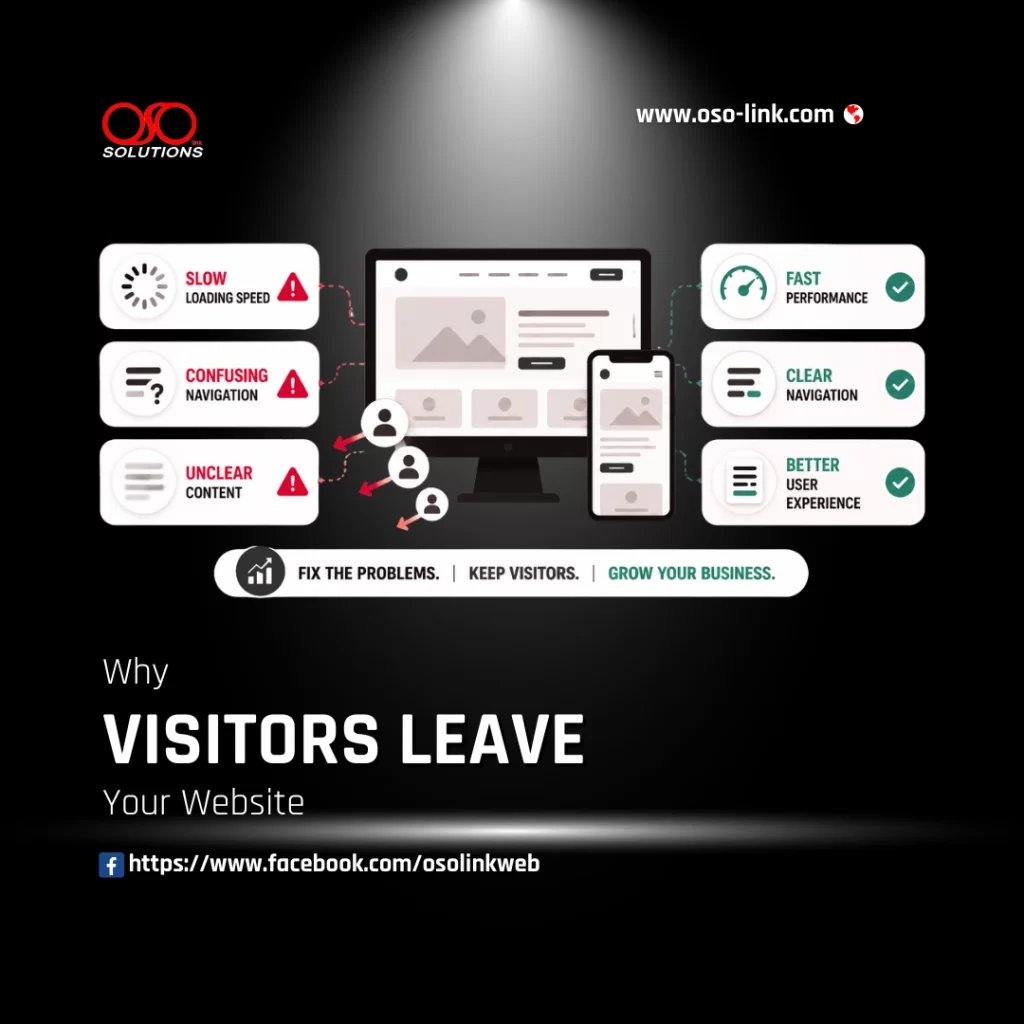
Your website should be working for your business 24 hours a day. If visitors are leaving within seconds, however, you could be missing valuable opportunities to generate leads, build trust, and convert potential customers.
Many business owners assume they need more website traffic when the real problem is that their website isn’t giving visitors a reason to stay.
Let’s look at the most common reasons people leave websites—and what you can do to fix them.
1. Your Website Is Too Slow
Speed matters. Studies consistently show that visitors expect websites to load quickly, especially on mobile devices. If your website takes too long to load, many users will leave before they even see your content.
Common Causes of Slow Websites
- Large, unoptimized images
- Poor-quality web hosting
- Too many plugins or scripts
- Outdated website software
- Unoptimized mobile experiences
How to Fix It
- Compress and optimize images.
- Use reliable website hosting.
- Remove unnecessary plugins and third-party scripts.
- Enable caching and performance optimization.
- Regularly update your website software.
A faster website doesn’t just improve the visitor experience—it can also support better search engine performance.
2. Your Navigation Is Confusing
Imagine walking into a store where nothing is labeled and you can’t find the checkout counter. That’s exactly how visitors feel when a website has poor navigation.
Visitors should immediately know:
- Who you are.
- What products or services you offer.
- How to contact you.
- What action they should take next.
Signs Your Navigation Needs Improvement
- Too many menu items.
- Hidden contact information.
- Unclear call-to-action buttons.
- Important pages are difficult to find.
How to Fix It
Keep your navigation simple and intuitive. Consider including only the essentials:
- Home
- About
- Services
- Portfolio
- Blog
- Contact
Adding clear buttons such as “Request a Quote,” “Contact Us,” or “Learn More” can also improve the user experience.
3. Your Content Isn’t Clear
One of the biggest website mistakes businesses make is talking too much about themselves instead of addressing their customers’ needs.
Instead of saying:
“We provide innovative digital solutions for modern businesses.”
Try saying:
“We build fast, mobile-friendly websites designed to help small businesses generate more leads online.”
The second example immediately tells visitors:
- What you do.
- Who it’s for.
- Why it matters.
How to Improve Your Website Content
- Use clear and simple language.
- Focus on solving customer problems.
- Break up long paragraphs.
- Use headings and bullet points.
- Include clear calls-to-action throughout your pages.
Remember, visitors shouldn’t have to guess what your business offers.
4. Your Website Isn’t Mobile-Friendly
Most people browse websites using their phones. If your website doesn’t work properly on mobile devices, visitors are unlikely to stay.
Check Your Website for These Issues
- Text that is difficult to read.
- Buttons that are too small to tap.
- Images that don’t resize properly.
- Slow loading times on mobile devices.
- Forms that are difficult to complete.
A mobile-friendly website creates a better experience for every visitor, regardless of the device they’re using.
5. Your Website Doesn’t Build Trust
Visitors are more likely to stay when they trust your business.
Your website should clearly communicate professionalism and credibility.
Trust Signals Every Website Should Include
- SSL security certificates
- Customer testimonials
- Professional branding
- Clear contact information
- Fast loading speeds
- Updated content
- Professional photography and graphics
Small improvements in credibility can have a significant impact on conversions.
Website Optimization Checklist
Before publishing or redesigning your website, ask yourself:
- Does my website load quickly?
- Is my navigation simple and easy to use?
- Is my content clear and customer-focused?
- Is my website mobile-friendly?
- Is it easy for visitors to contact me?
- Do I have clear calls-to-action?
- Does my website build trust?
If you answered “No” to any of these questions, you’ve identified an opportunity for improvement.
Final Thoughts
Your website doesn’t have to be complicated to be effective. In many cases, visitors leave websites because they can’t quickly find what they’re looking for.
A successful website should answer three questions within seconds:
- Who are you?
- What do you offer?
- What should visitors do next?
By improving your website’s speed, navigation, content, and user experience, you can create a website that keeps visitors engaged and encourages them to take action.
Need Help Improving Your Website?
At OSOlink Solutions, we help businesses build fast, mobile-friendly websites designed to attract visitors and convert them into customers. Whether you’re launching a new website or improving an existing one, investing in a better user experience can make all the difference.